When we hear “core strength”, most of us picture adult fitness or sport. In children, though, the core is the quiet foundation underneath almost everything the body does, from sitting upright at a desk to forming letters with a pencil. It is easy to miss, because the work it does is invisible until it is not there.
Many parents are surprised to learn that struggles with fine motor tasks, like handwriting or cutting with scissors, often start in the trunk rather than the hands. Without a steady centre, a child’s body has to work twice as hard just to stay upright, which leaves little energy left over for concentrating and for the small, precise movements of the fingers. Seeing that link changes how you support a child as they take on everyday tasks.
What the core actually is
In children, the core is not just the tummy muscles. It is a whole muscular cylinder wrapped around the middle of the body: the stomach muscles at the front, the deep muscles of the back, the pelvic floor underneath, and the shoulder girdle up top.
A helpful picture is the foundation of a house. If the foundation is steady, the doors and windows upstairs open and close smoothly. If it is shaky, nothing above it works quite right. In the body, when the trunk is stable, the hands and fingers are free to do their fine, careful work. When the trunk is weak, that precision is much harder to find.
How a weak core shows up at school
When a child’s core is weak, holding their own body up against gravity for any length of time is genuinely tiring. Sitting still on a chair, or cross-legged on the floor at mat time, can be exhausting in a way that is easy to mistake for not paying attention. To cope, children tend to fall into a few telltale postures.
- The slouch and lean. You might see your child slumping forward over the desk, propping their head on their free hand, or leaning their whole body against a wall or the child next to them at mat time.
- The W-sit. On the floor, a child with a weak core often sits with their bottom down and their knees bent back into a W shape. It locks the hips and widens their base, so they can stay upright without really using their trunk at all.
- Constant fidgeting. If no sitting position feels comfortable, a child shifts their weight again and again: rocking the chair, sitting on their feet, hooking their legs around the chair, or popping up and down. This is rarely about behaviour. It is usually a tired, aching back looking for relief.
The link to handwriting
It seems back to front that strengthening the tummy and back could improve handwriting, but it is a well-known idea among occupational therapists. It comes down to a simple principle, sometimes described as stability close in for mobility further out. A child needs a steady base near the centre of the body before the fingers, far out at the edge, can move with control.
When the core is strong, the shoulders stay settled, the arm can relax, and the wrist can rest easily on the desk. That leaves the fingers free for the fine, fiddly job of holding a pencil and shaping neat letters. When the core is weak, the shoulder has to tense up to hold the body upright, and that tension travels down the arm. The result is often a tight, tiring grip, heavy pressure on the page, and a hand that wears out quickly.
Playful ways to build core stability
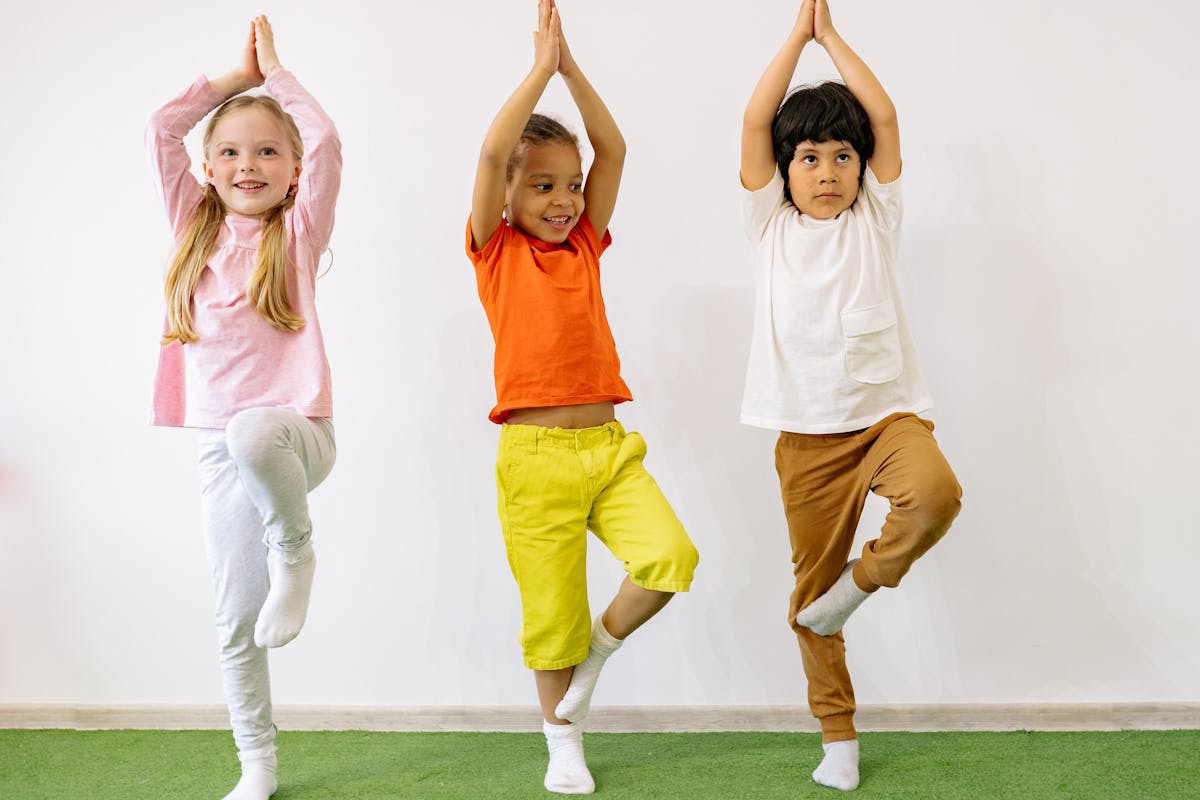
The best way to build a child’s foundation is through active, unstructured play that asks the trunk to twist, steady itself, and hold the body in all sorts of positions. None of it needs to look like exercise.
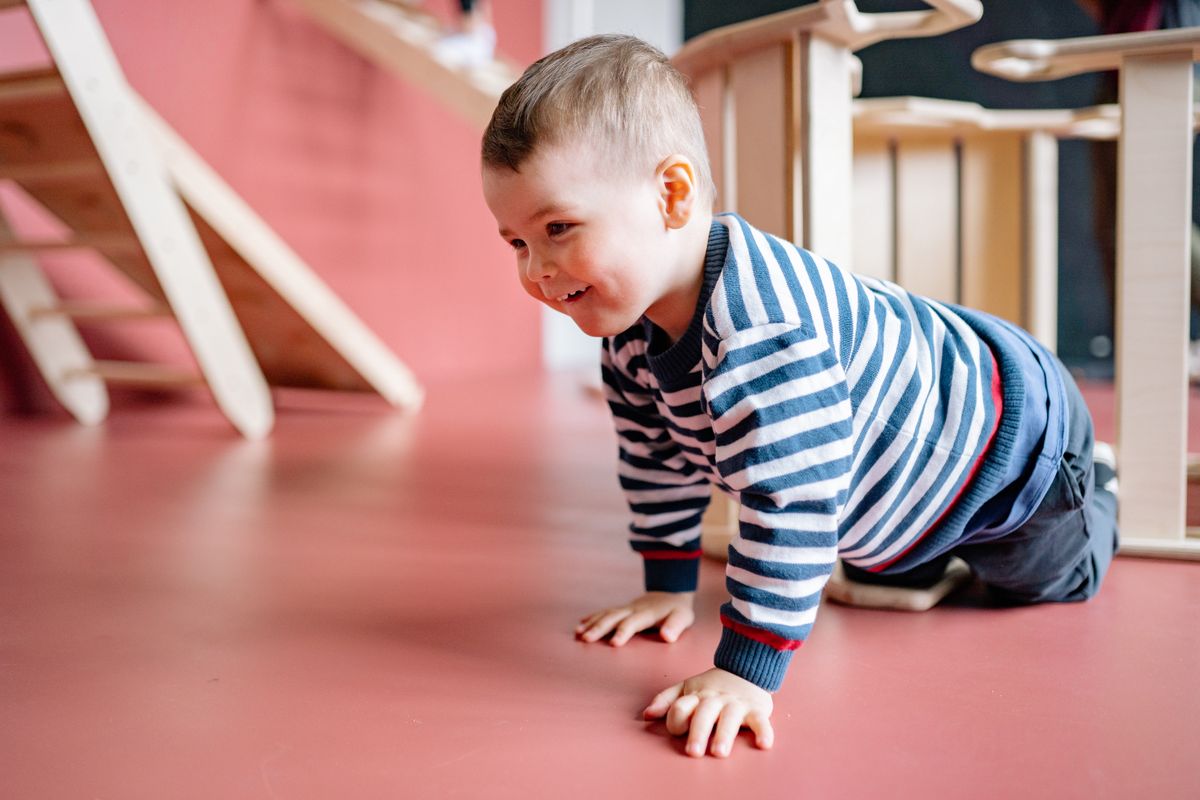
- Animal walks. Bear crawls on hands and feet, or crab walks with the tummy facing up, ask the stomach, back, and shoulders to work together to carry the body. They are great fun and quietly demanding.
- Tummy time and lying-down play. Tummy time is not just for babies. Older children get a lot from reading, drawing, or doing a puzzle while lying on their front, propped up on their elbows. That position strengthens the deep muscles of the neck, upper back, and shoulders.
- Shifting-balance play. Surfaces that give and move a little are a brilliant way to wake up the deep stabilising muscles. When a child balances or steps on something that shifts gently underfoot, the body has to fire up the core to stay steady, which turns ordinary play into an easy whole-body workout.
If your child is finding it hard to focus, fidgeting a lot, or getting frustrated with handwriting, it is worth looking at the bigger picture of how their body is developing. By building a steady core through plenty of playful movement, you give them the physical stamina to sit comfortably, concentrate more easily, and settle into the school day.