Walk into almost any toy aisle and you will find shelves of bright plastic that flashes, sings, and moves on its own. These toys are built to grab a child’s attention in an instant. As many parents know, that first burst of excitement often fades within days, leaving a trail of discarded plastic on the living-room floor.
When a toy does all the work, the child is left watching rather than creating. Deeper, longer play tends to come from the opposite approach: open-ended play. By keeping fewer, better-made materials out and packing the rest away, you can give your child the calm and the space to settle into longer, more imaginative play on their own.
What open-ended play is
Open-ended play is play with no fixed rules, no single right answer, and no set finish line. A closed toy, like a plastic dashboard with buttons or a battery-powered robot, can really only be used one way. Once a child has worked out the mechanism, the challenge is gone.
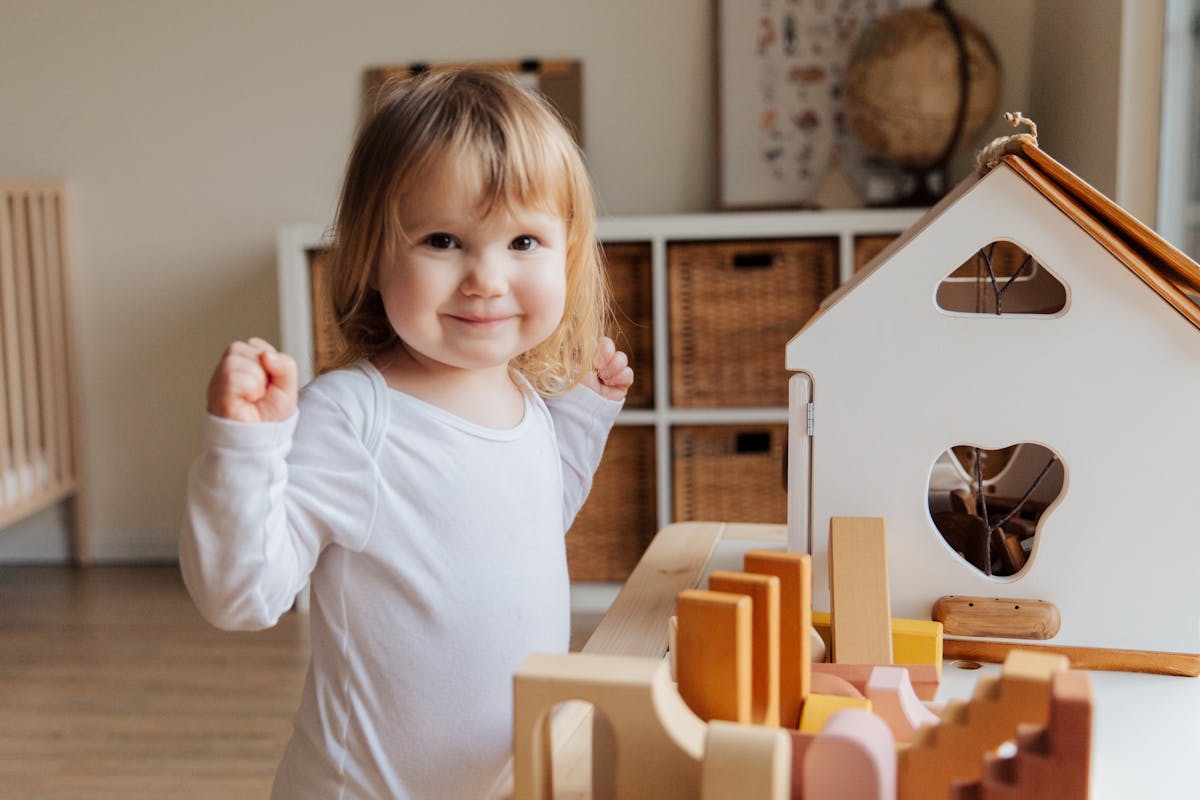
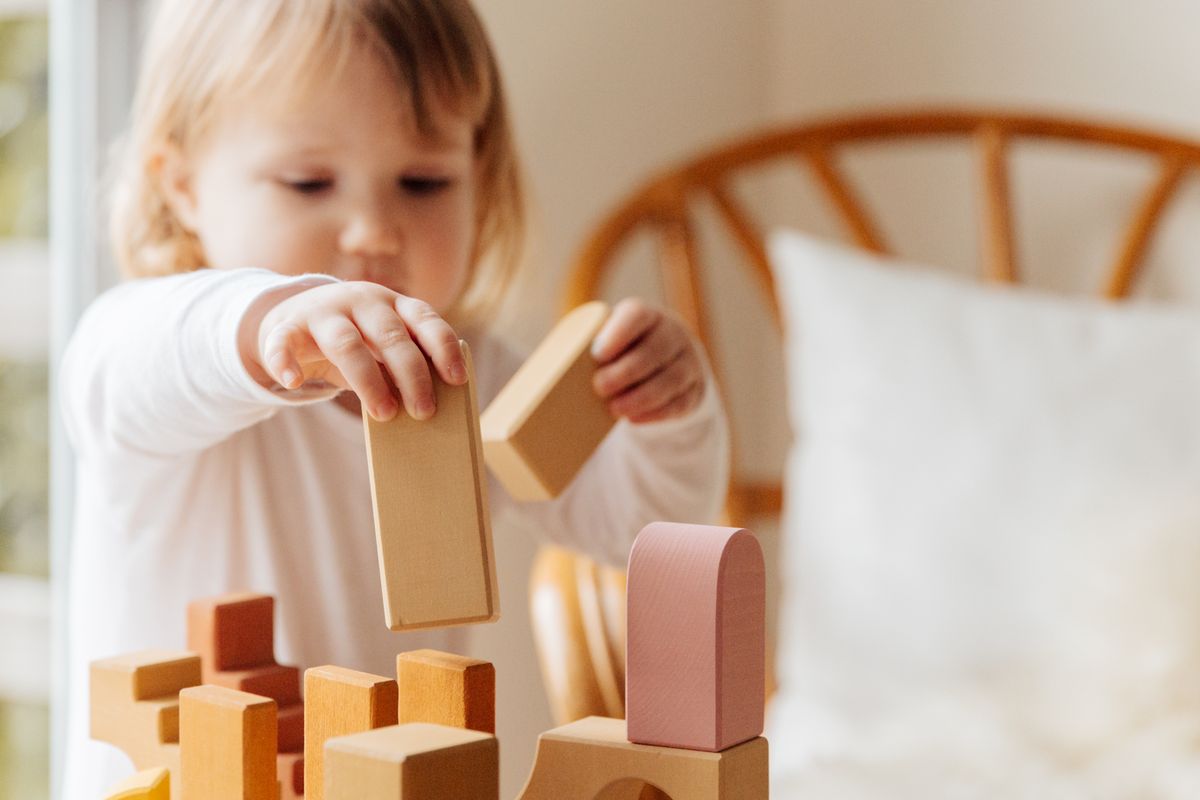
An open-ended material can be a hundred different things. It leans entirely on the child’s own ideas to bring it to life. A set of plain wooden blocks can be a castle one day, a busy road the next, and a shop counter the day after that. The play grows as the child grows, which makes these materials useful across a wide span of ages.
Why fewer, better materials win
It is easy to assume that more toys mean more fun. In practice, too much choice often tips young children into feeling overwhelmed. Faced with an overflowing toy box, a child can find it hard to settle, which can show up as a short attention span and a habit of tipping out every bin without really playing with anything. Keeping less out, and choosing pieces that can be used in many ways, tends to help in a few clear ways.
Longer attention spans
When a child is not surrounded by clutter competing for their eye, they can sink into focused play for longer. They stay with one idea, and they learn to problem-solve when their first attempt does not quite work.
More flexible thinking
Because open-ended materials do not come with instructions, children get to practise flexible thinking. They learn to look at an object and ask, what else could this be? That habit of seeing more than one possibility is well worth building.
Safer, sturdier play
Choosing fewer items means you can step away from cheap, fragile plastic and pick durable, well-made materials that stand up to years of energetic use, which is easier on both safety and the household budget.
Sensory play space ideas
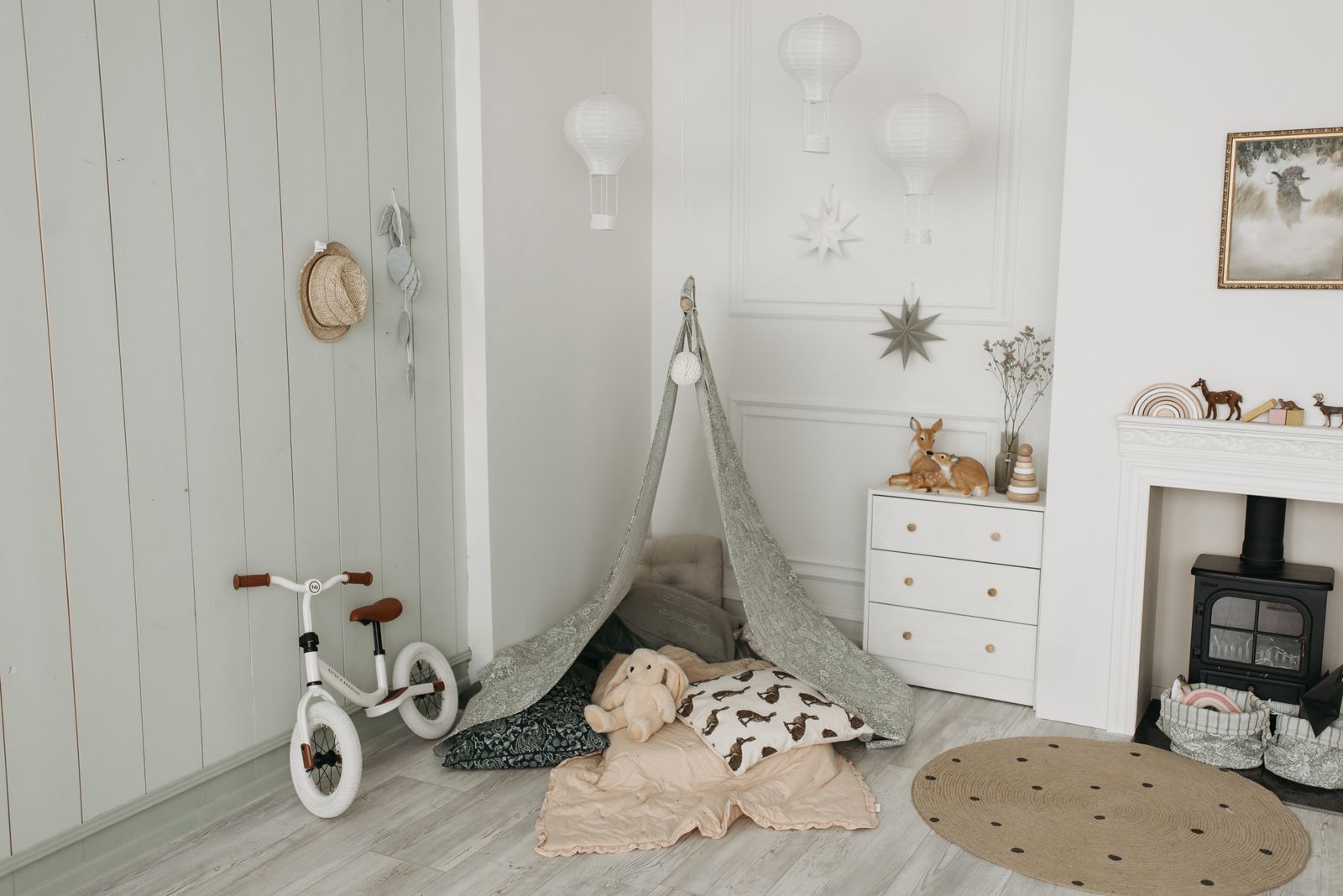
Moving to a calmer, more curated play space does not mean the room has to look bare. It means choosing a few sturdy, flexible anchors that quietly invite play.
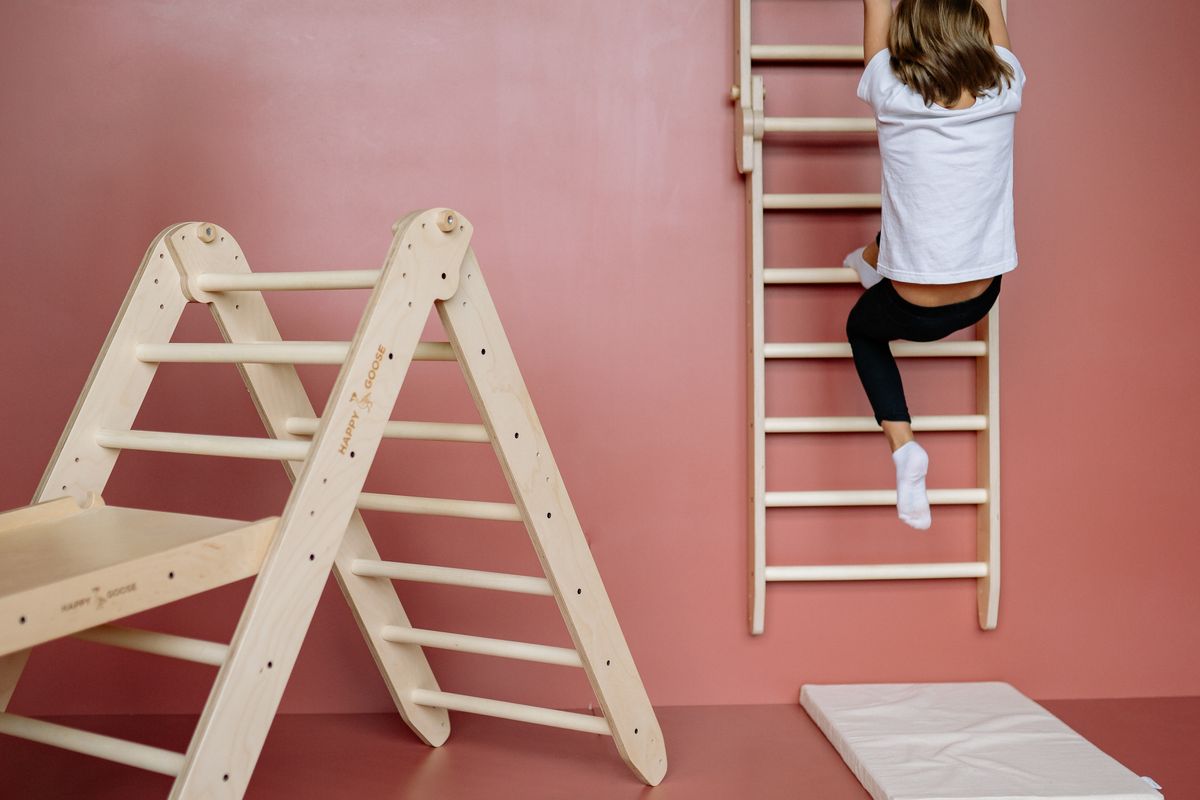
High-density modular foam pieces work especially well as that anchor, because they bridge big-movement play and imaginative play in one set. Since the dense blocks, circles, and arches have no fixed purpose, what they become shifts with your child’s imagination. On an active afternoon, they are a low obstacle course, a step pyramid, or a balancing ridge. On a quiet morning, the very same pieces become a reading fort, a spaceship cabin, a puppet theatre, or a market stall. The scale and sturdiness of good foam give children a real canvas to redesign their play space day after day, building spatial awareness and motor planning while staying safe on a cushioned surface.
Three tips for independent play
If your child is used to flashing, reactive toys, the shift to open-ended play may take a gentle run-up. These three habits help.
- Rotate the toys. Split the collection into thirds. Keep one third out on low, open shelves where your child can see it, and store the rest away. Swap them every few weeks. When old favourites reappear, they feel new again and spark a fresh wave of interest.
- Set the scene. Rather than tipping blocks into a deep bucket, set a few out on the floor in a simple shape, like a low arch or a row of steps, before your child comes in. That small prompt catches the eye and gives an easy way into play.
- Step back. When you play together, try not to take over the story or correct how something looks. Follow your child’s lead, ask open questions like what should we add next, and let them direct their own little worlds.
The takeaway
The best play spaces are not the ones packed with the loudest or most expensive gadgets. By leaning into a fewer, better approach and choosing open-ended materials that grow with your family, you clear away the clutter and hand your child the calm, the space, and the simple tools they need to follow their own imagination.