For a lot of parents, independent play can feel like a far-off dream. It is easy to get stuck in a loop where a child asks to be entertained every few minutes and needs an adult nearby to stay interested in their toys at all. When a child finds it hard to play alone, it is rarely because they lack imagination.
More often, the issue is simply how the space around them is set up. In early childhood, a child’s surroundings act a little like a quiet teacher. By setting up a room that removes the obvious barriers and meets your child at their own scale, you can help independence grow, stretch out their attention span, and let them lead their own play with more confidence.
What self-directed play is
Self-directed play is when a child chooses what to play with, decides how to use it, and sets the rules of the game entirely on their own terms. No adult is steering the outcome, timing the activity, or correcting how it is done.
This kind of play matters for building independence, problem-solving, and the ability to cope when things do not go to plan. When children direct their own play, they learn to work through boredom, test what their bodies can do, and feel the quiet satisfaction of solving a puzzle without an adult handing them the answer.
Lower everything to the child’s scale
The first rule of supporting independence is making sure everything your child needs is within reach without having to ask. If toys, art supplies, and books live on high shelves or inside deep tubs with tricky lids, a child loses the ability to get started on their own.
- Use low, open shelving. Choose low shelves where items are fully visible at your child’s eye level, so they can see their options and choose.
- Skip the deep toy box. Deep chests tend to be where toys go to be forgotten. They invite a child to tip the whole lot on the floor to find what is at the bottom, which makes for instant mess and a room that quickly feels like too much.
Reduce visual clutter
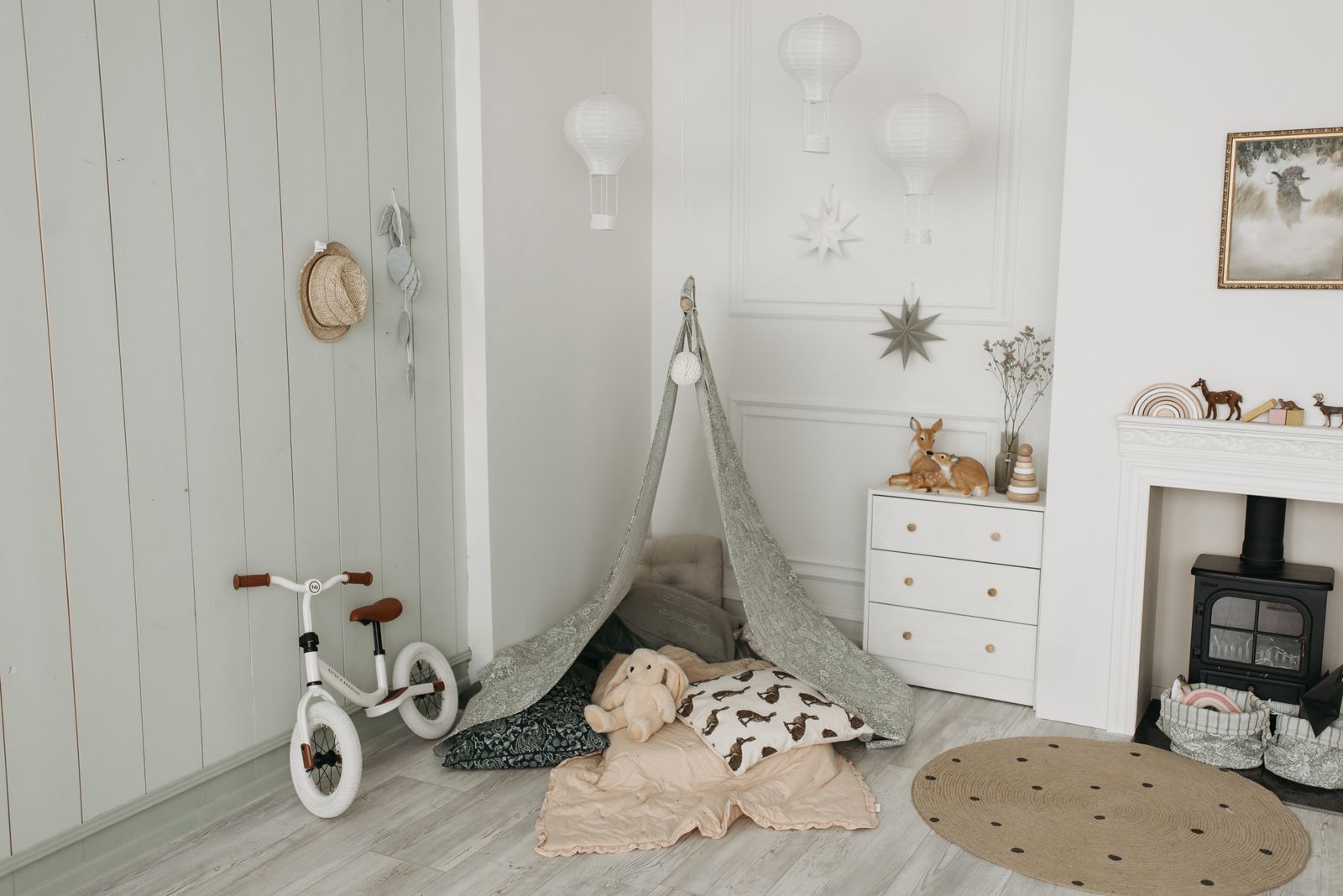
A room bursting with colour, overflowing bins, and scattered plastic can quietly wear a child out. When there is too much to take in, it gets harder to pick one thing and settle into it. A calmer, simpler layout helps.
- Keep only a small, chosen selection of toys out at any one time, roughly four to six different activities on display.
- Use plain baskets in natural materials like canvas, rope, or wood to hold the smaller pieces.
- Leave some clear floor space. A room packed wall to wall with furniture leaves little room to move and build.
Invitations to play
Instead of tucking every material away, set up a few gentle starting points around the room, something early childhood educators sometimes call a provocation.
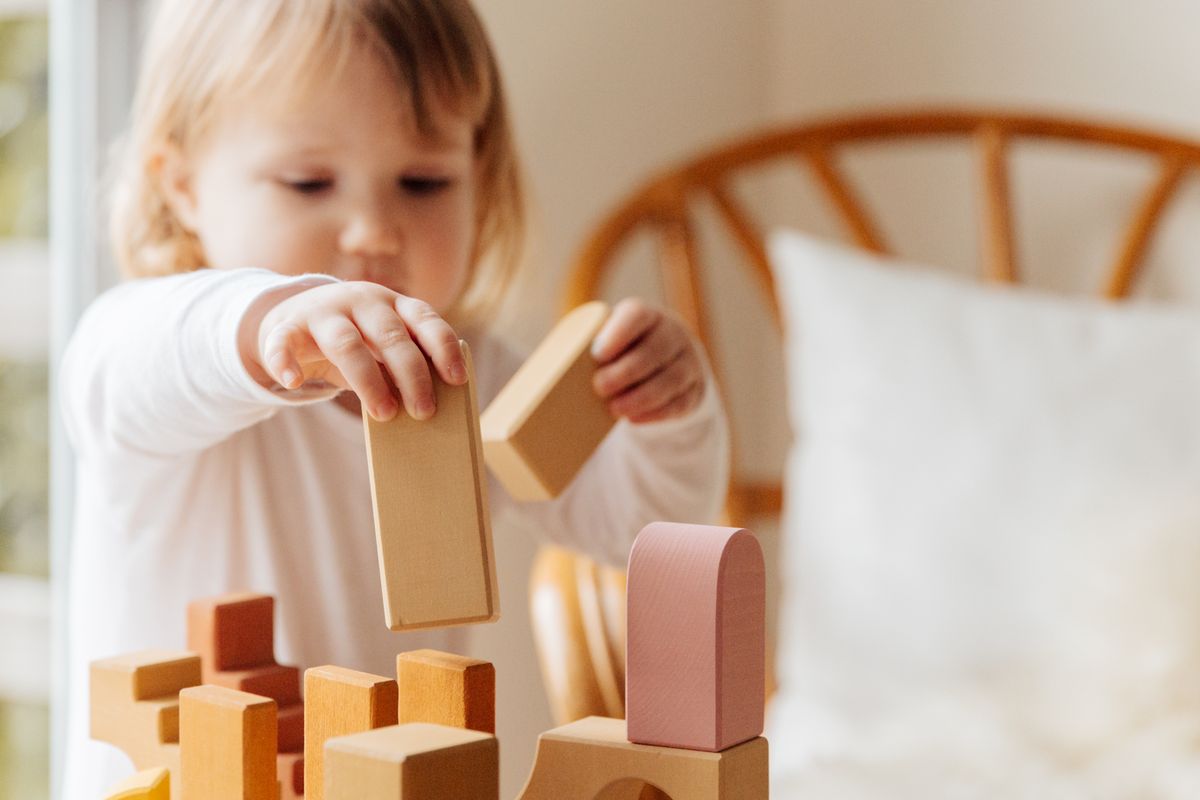
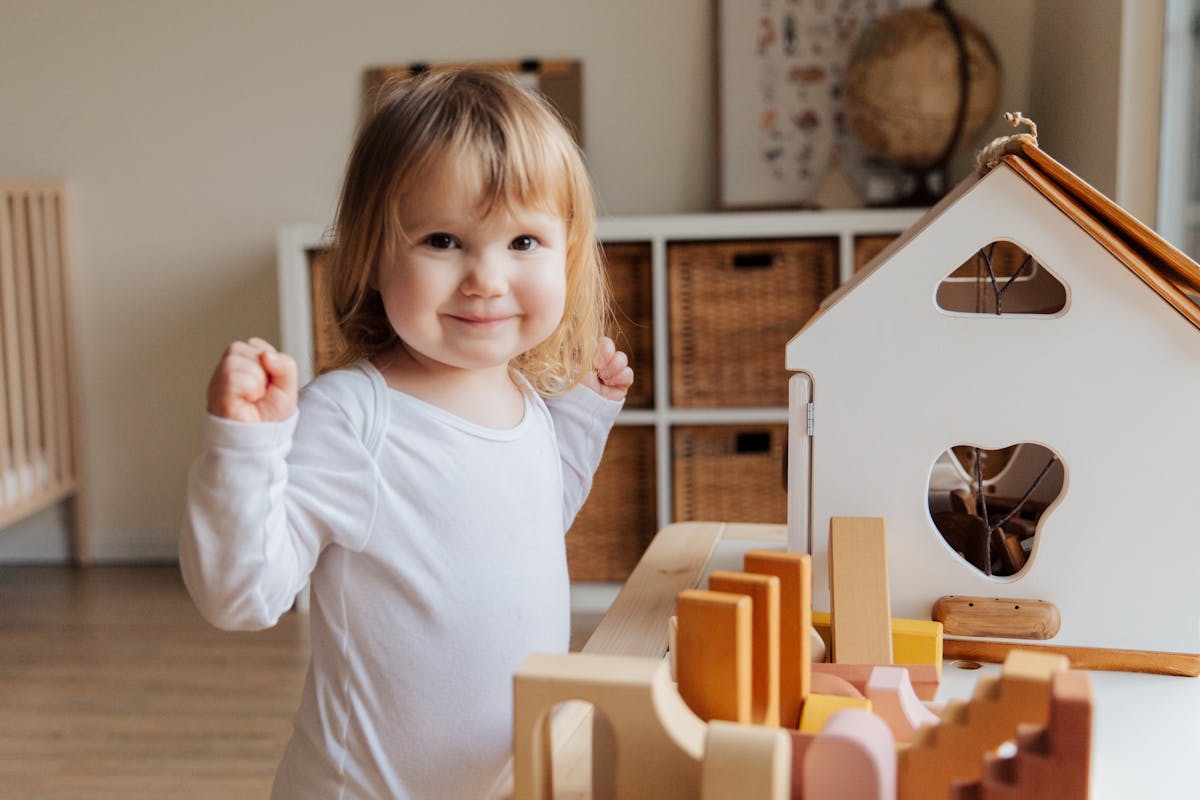
You might place a few wooden blocks in a simple semicircle on the floor, or set a couple of open-ended books beside a soft seat. As your child comes into the room, this catches their eye and gives them an easy, friction-free way into an activity, without anyone needing to say go and play.
Flexible, multi-level anchors
To keep self-directed play interesting over months and years, the core furniture in the room should move with your child’s mood and stage.
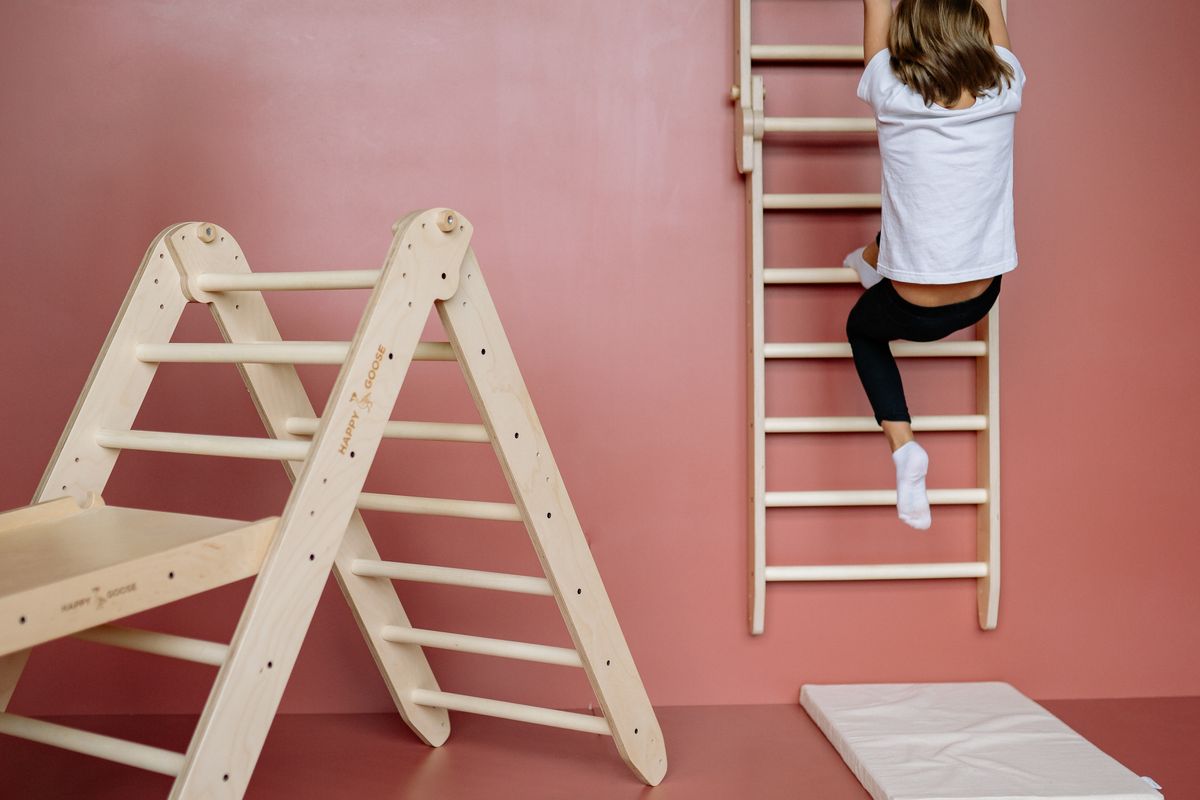
High-density modular foam pieces, like soft cushions, steps, and wedges, make a good anchor for an independent space. Because they are modular and light, children can safely move and rearrange them on their own. On an active afternoon, your child might build a low balance bridge to test their coordination. On a quiet morning, those same blocks become a private reading nook or a little shopfront. Giving children real control over the shape of their play space builds a strong sense of ownership and a quiet belief in what they can do for themselves.
Parallel presence
When a child is just learning to play independently, going from your full attention to an empty room can be too big a jump, and they may abandon the game to come and find you.
Instead, try parallel presence. Stay in the room, but get on with your own quiet task, reading, folding washing, or answering a message. If your child tries to pull you into the game, gently point them back to it: I am going to finish my chapter while you finish your foam tower, I cannot wait to see it. Your calm, steady presence is a kind of safety net that lets them focus on their own play.
The takeaway
Building independence does not happen overnight, but it starts with the room you set up at home. By lowering things to your child’s scale, clearing away the visual clutter, and offering a few flexible, open-ended pieces, you hand the imagination back to your child, and step gently out of the role of full-time entertainer into the role of a quietly proud onlooker.